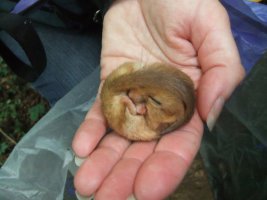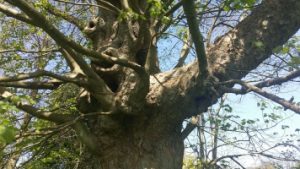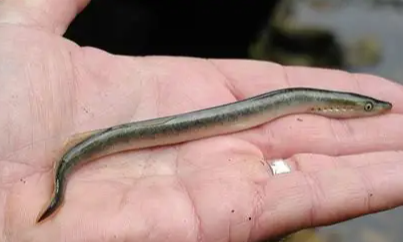
Ecological Surveys Ltd. undertakes waterway surveys on behalf of various companies and local authorities. We have experience of surveying for virtually all species likely to be present in English waters, including Brook lamprey (Lampetra planeri)

Otters –
The European otter is the only native UK otter species. It’s a European protected species (EPS) and is also fully protected under Schedule 5 of the Wildlife and Countryside Act 1981.
You’re breaking the law if you:
- capture, kill, disturb or injure otters (on purpose or by not taking enough care)
- damage or destroy a breeding or resting place (deliberately or by not taking enough care)
- obstruct access to their resting or sheltering places (deliberately or by not taking enough care)
- possess, sell, control or transport live or dead otters, or parts of otters
If you’re found guilty of an offence, you could get an unlimited fine and up to 6 months in prison.
When is an Otter survey required?
If any of the following statements are true, an Otter survey will most likely be expected by the LPA
- Distribution and historical records suggest otters may be present
- The development will affect a water body (e.g., river, stream, lake, sea or marshland)
- development will affect habitats near a water body directly or through environmental impacts, e.g., noise, light, dogs, and human activity
- It’s a large development close to where otters it might reasonably be expected
Additionally, the LPA can request a survey to demonstrate that it has considered potential impacts on otters.
Survey methods
A suitably experienced surveyor should do surveys. They might also have to be a licensed surveyor.
Look for evidence of otters, including:
- dung (spraints)
- tracks (footprints)
- feeding remains
- otter slides (into water)
- holts (underground dens)
- couches (above-ground sites where otters rest during the day)
You can survey at any time of year, but springtime is best. This is because evidence is often easier to find in spring, as water levels recede and wet mud is exposed, making paw prints more visible.
You might not need to do detailed survey work if avoidance and mitigation measures are built into development proposals, but you must provide enough information in the survey to understand:
- What kinds of impacts there might be on otters, and how the impacts might affect them
Otter activity varies according to the season. You might need to conduct several surveys throughout the year to determine the extent of the impacts and what mitigation measures may be necessary. How many surveys you’ll need to do depends on –
Assessing the impacts
Otters are highly territorial animals with large home ranges. Depending on the quality of the habitat and availability of food, males can range along rivers for 35km. Otters will continue to try to use routes if alternatives are not included in a mitigation strategy. Impacts to consider include:
- habitat loss or degradation in or near water bodies
- habitats are being cut off and becoming fragmented
- holts and resting places are being removed
- disturbance to resting and feeding places
- disturbing their usual routes, e.g., road bridge or culvert works, forcing otters to use roads or bridges that might mean it’s more likely that otters will be killed or injured on the road
- changes to water quality, which could also affect the food source
The LPA will be expected to mitigate the impacts.
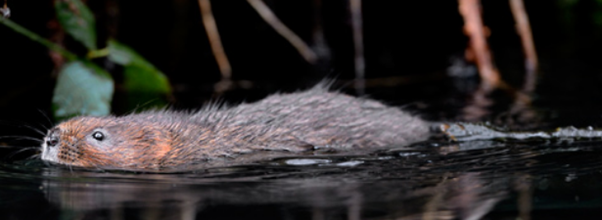
Water Voles –
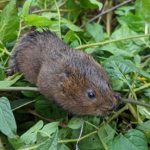
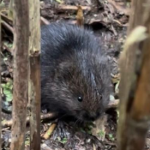
Water voles receive full legal protection through their inclusion in Schedule 5 of the Wildlife and Countryside Act 1981 (as amended) in respect of section 9, as well as the Countryside & Rights of Way Act 2000. This section of the Act makes it illegal to intentionally kill, injure, or capture a water vole; possess or control alive or dead water voles, or any part of a water vole or anything derived from a water vole; intentionally or recklessly damage, destroy, or obstruct access to any structure or place which a water vole uses for shelter or protection; intentionally or recklessly disturb a water vole while it is occupying a structure or place which it uses for shelter or protection.
Water voles usually inhabit slow-moving, shallow freshwater areas such as rivers, ditches, lakes, and canals. They can also be found in brackish water. They favour steep banks that are suitable for burrowing and well-vegetated. Their diet is almost exclusively vegetarian, including grasses, reeds and other herbaceous vegetation.
The survey methodology involves an assessment of both banks of all watercourses/ditches running through and around the site. This is often achieved by walking along the watercourse and having surveyors on the banks as well.
A search would be made for possible signs of water vole activity, including:
- Sightings – confirmed sighting of a water vole during the survey.
- Latrines – collections of droppings that are 8-12mm long, 4-5mm wide, cylindrical with blunt ends, green/brown/black and have no odour.
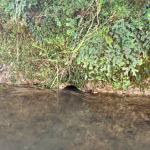
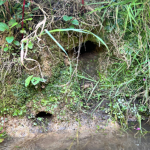
- Burrows – holes along the water’s edge and in the bank above that are wider than high, with a diameter of 4-8cm.
- Footprints – four toes in a star arrangement from the fore foot and five toes from the hind foot, with the outer ones splayed and measuring 26-34mm from heel to claw.
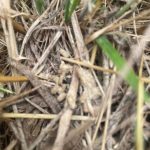
- Pathways in vegetation – low runs or tunnels 5-10cm wide pushed through the vegetation leading to the water’s edge, burrow entrances or favoured feeding areas.
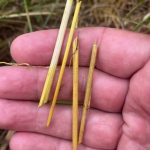
- Feeding remains – neat piles of chewed lengths of vegetation up to 10cm long and with 45-degree cuts to their ends. Only green vegetation should be used as a sign of recent water vole presence.
- Cropped grass around tunnel entrances – vegetation nursing females in the nest graze vegetation around the burrow entrance short to form a ‘lawn’
White Clawed Cray Fish
Only one native species of crayfish is found in UK waterways – the White-clawed Crayfish Austropotamobius pallipes. Unfortunately, since the 1970s, other non-native crayfish species have found their way into our rivers and streams, with grave consequences for native species.
The White-clawed Crayfish is widespread in the British Isles but absent from Scotland, west Wales, and Cornwall, and it generally tends to be confined to hard alkaline waters. It prefers streams and rivers with low sediment levels and does not tolerate pollution or conditions that deplete oxygen levels.
Crayfish look like small lobsters, measure up to 15 cm long, and are greenish brown in colour. Crayfish feed on animal and vegetable matter, usually at night, and they are eaten in turn by a range of fish, eels, birds and mammals, including rats, otters and mink. They used to form an important part of an otter’s diet.
Mating takes place in October or November, and when the eggs are laid, they are attached to the underside of the female’s tail. Over-wintering as eggs, the young hatch in the spring. The young cling to their mother and do not leave her until May or June. Generally, females have smaller claws than males but wider abdomens because they need to carry their offspring.
Now, there are at least four non-native crayfish to be found in Britain. The most common of these is the American Signal Crayfish (Pacifastacus leniusculus), which arrived in our countryside by being deliberately or accidentally released from fish farms.
Ministry of Agriculture, Fisheries and Food (MAFF), now called the Department for Environment, Food and Rural Affairs (Defra), encouraged the ‘farming’ of crayfish as a farm diversification alternative – an incredibly stupid and short-sighted decision!!
The Signal Crayfish was first farmed in 1976; many soon escaped, and it spread rapidly. However, this species is a carrier of the fungal disease Aphanomyces astaci, which has caused high mortality among White-clawed crayfish.
Apart from the fungal disease, another problem putting pressure on our native crayfish is that they do not compete very well with the Signal Crayfish for habitat and food. The American invader is significantly bigger, more powerful and naturally aggressive. In a head-on confrontation, there can only be one winner.
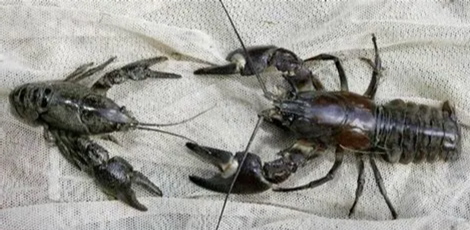
The disparity in size is obvious.
If infected Signal Crayfish exist in the waterway, there is no point in reintroducing the native species. In any case, the Signal Crayfish appear robust enough to settle quite happily in our waters.
Once established, it is pretty much impossible to remove the invasive crayfish from a water course without killing virtually every other species present.
Hygiene
Spores from the fungus can be carried by damp equipment as well as by water, fish, animals and birds; however, the Signal and native crayfish appear to be the only hosts of the disease. It is obviously very important to maintain hygiene during fishing activities in contaminated waters.
The Present Situation
Unfortunately, this species is really struggling. Few water courses now harbour our native crayfish. Those that do are precious and must be protected.
LPAs will expect white clawed crayfish to be considered in any planning application where they are potentially present and potentially impacted by any proposed works.
We have experience surveying for white-clawed crayfish at several locations.
Seasonal restrictions on survey periods
If you are contemplating works to watercourses or are near a watercourse, it is advisable to instruct a survey for this species as early as possible. You do not want to reach validation and be asked to complete a survey, as this might delay your submission by 6 months or more.
Please contact us for a site-specific quotation –
admin@ecological-surveys-ltd.co.uk
Please call us on 0800 888 6846 / 07736 458609